Special solutions

For full yield potential

Adjusting the telescopic axle to suit

Compaction of the soil can reduce the yield in a field, especially when driving over the seed rows.

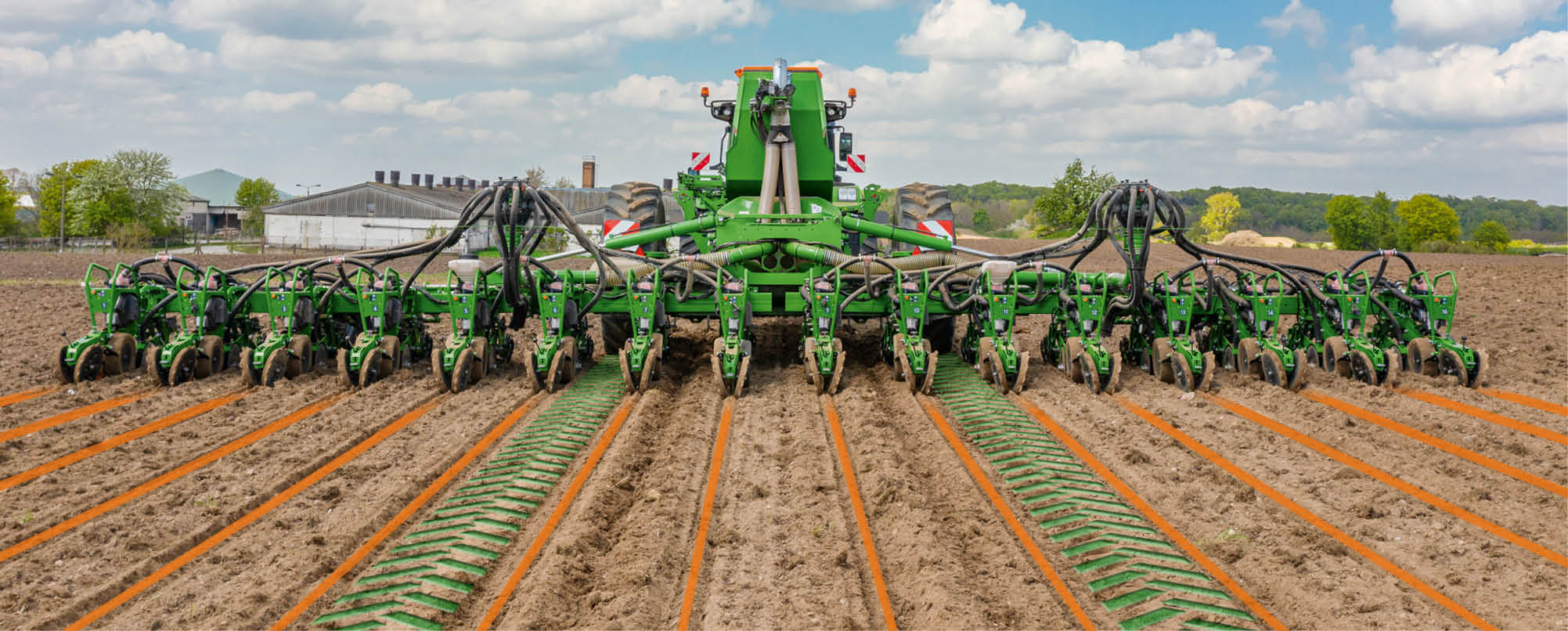
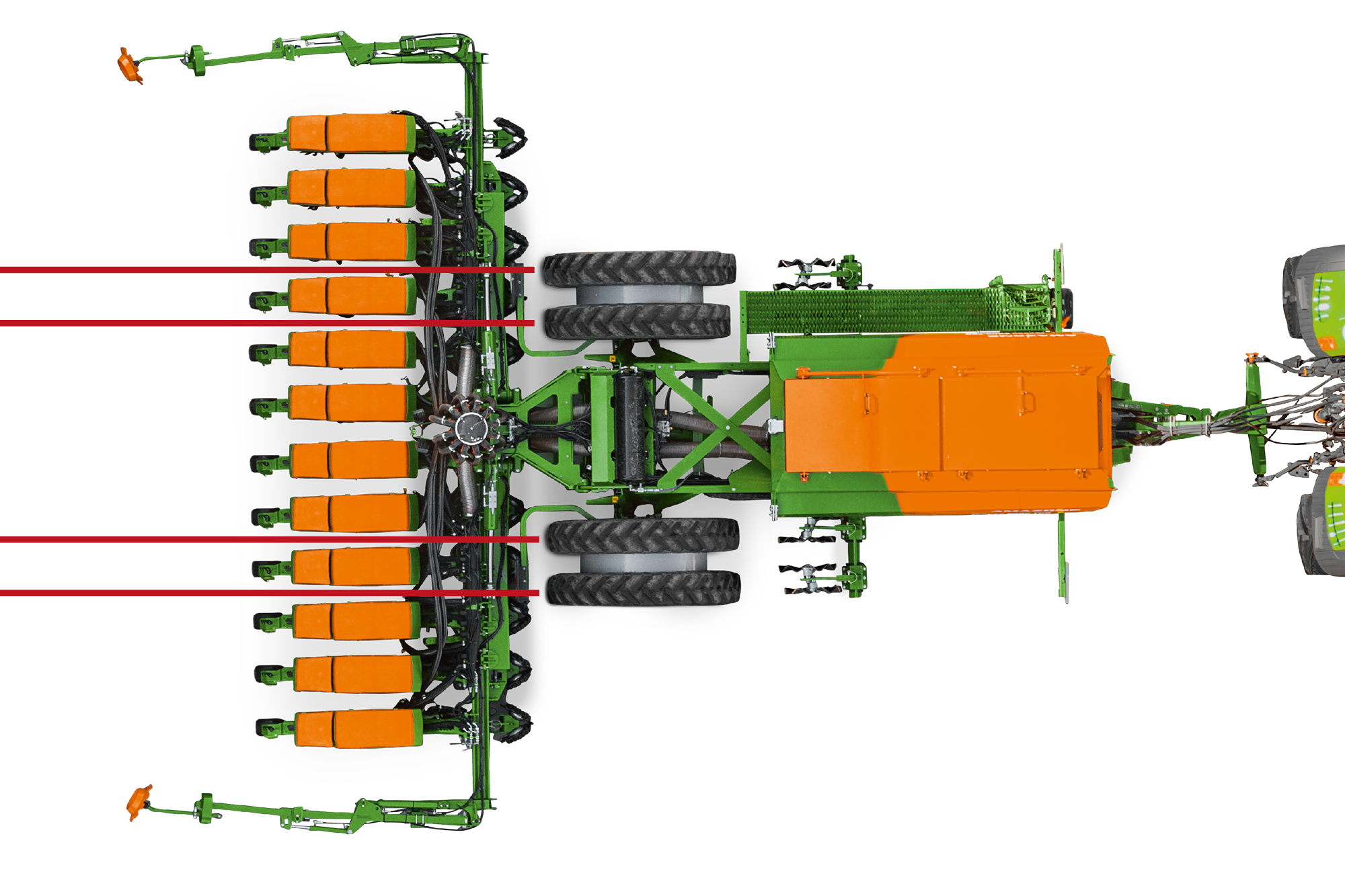
In order to minimise the impact of driving the Precea-TCC on the soil, the implement's tracks can be directed between the seed rows using the telescopic axle. This prevents compaction within the seed row immediately before sowing and the yield potential is retained.


Tramline offset

Wheelings in the field inevitably reduce the actual growing area for the crop. Although switching off the rows in the wheel marks saves on inputs such as seed and fertiliser, it reduces the seed rate and thus the natural yield potential of the field. It is better to create offset tramlines. The units in the affected rows are displaced hydraulically. This prevents the rows from being switched off and ensures that the seed rate remains the same. Crop care machinery can drive through the crop without damaging the plants.

With symmetrical tramlines, the relevant sowing units are moved simultaneously and the two tyre tracks of the tramline are created in just a single pass. In the case of asymmetrical tramlines, only one tyre track is created per pass by shifting the relevant sowing unit, and the tramline is completed in the second pass. The maximum offset distance of a unit is 400 mm. The offset travel can also be reduced if the entire width is not required due to track width or tyre size.
 

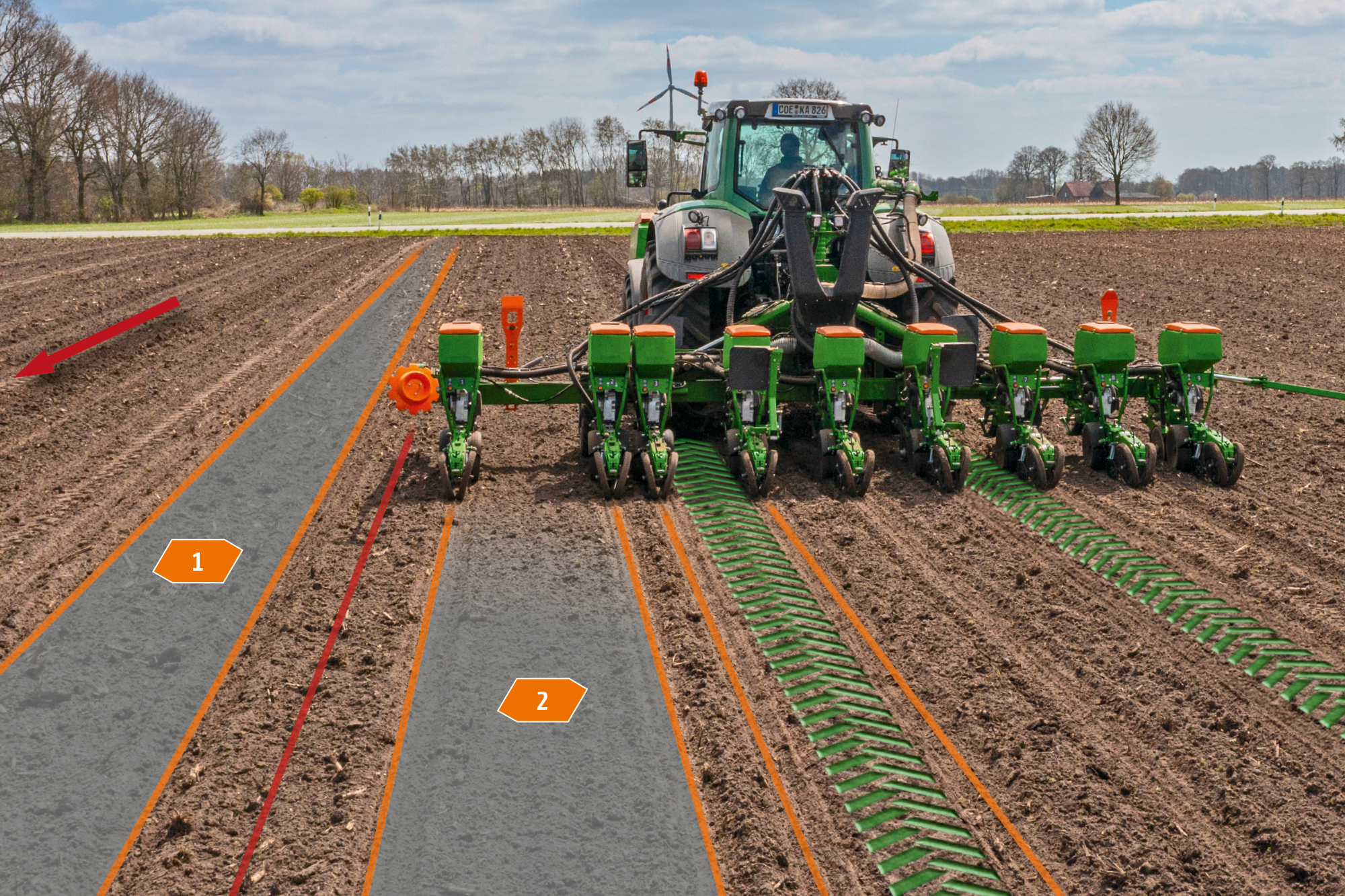
Creation of a tramline without row shut-off by offsetting the second sowing unit to the right.
1. The left-hand tramline was already created during the first pass.
2. The right-hand tramline is created during the second pass.


The advantages of the hydraulic tramline offset

  • Optimum yield potential since the seed rows do not need to be switched off, they are just offset
  • Relief for the driver by automatic detection and adaption to make the tramline
  • Lack of plant damage during subsequent working in the crop, as a result of the existing tramline
  • Optimum fertiliser supply since the fertiliser coulter and the singling unit are displaced together
     

The wheel marks of the Precea-TCC axle are left between the seed rows

More information + Less information -

Flexible specialist solutions within the range

Additional seed hopper for fine seeds


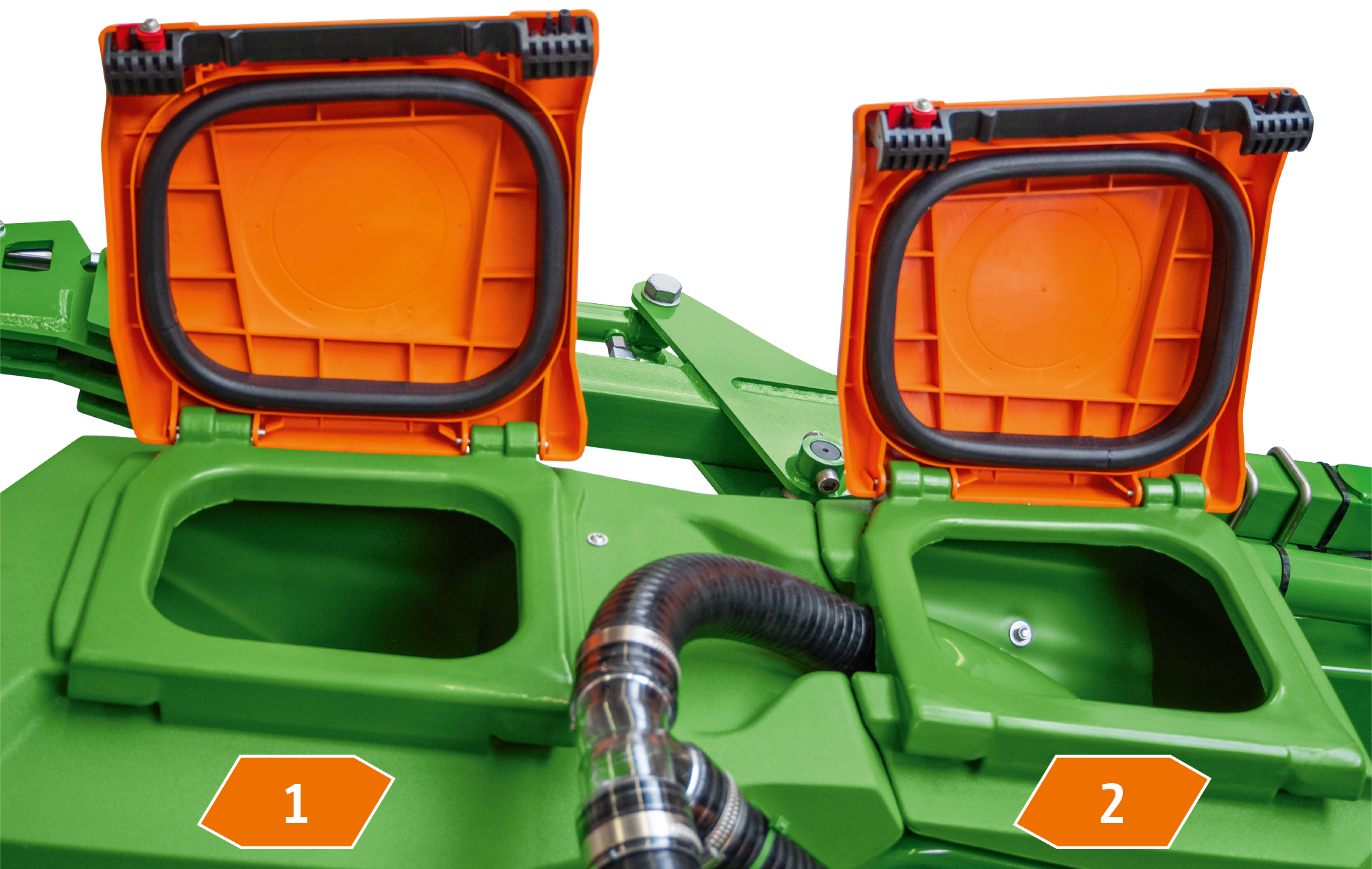
Additional hoppers on each row for 
1) micro-granules and 2) fine seeds

Models with a central seed hopper can be equipped with additional seed hoppers on each row for fine seeds such as oil seed rape. The hoppers, with a volume of 8 l, are mounted above the sowing units and are filled from sacks.

Advantages:
Seed from the calibration of the sowing units can simply be returned
For very small seed rates, there is no need to use the large seed hopper with longer conveying distances


Narrow row space sowing

Machines destined for narrow row space sowing, with row spacings of 45 or 50 cm, are equipped with a higher number of seed rows and smaller row widths.

Advantages:

  • Ideal for crops such as sugar beet or oil seed rape with a row spacing of 45 or 50 cm
  • Better distribution of growing space for crops such as maize
  • Faster row closure for better weed suppression and reduced water loss


Narrow twin tyres

With narrow twin tyres, the Precea-TCC's tracks can be placed, on a row spacing of 50 cm, between the seed rows.


No divided hopper – seed only

As a special solution for use without under-root fertilisation, such as when sowing soya, it is possible to dispense with a divided hopper. Then the fertiliser hopper, having a capacity of 3,000 l or 6,000 l is also used for seed and no fertiliser system is installed. The Precea 6000-TCC and Precea 7500-TCC can thus carry a total of up to 3,850 l of seed, while the Precea 9000-TCC and Precea 12000-TCC can carry a total of 8,000 l of seed.
 

More information + Less information -

Are you interested?

Provide us your contact details* and we will get back to you:
* Your contact details will only be used to contact you as requested.