TS spreading system

Perfection in every component, just like clockwork

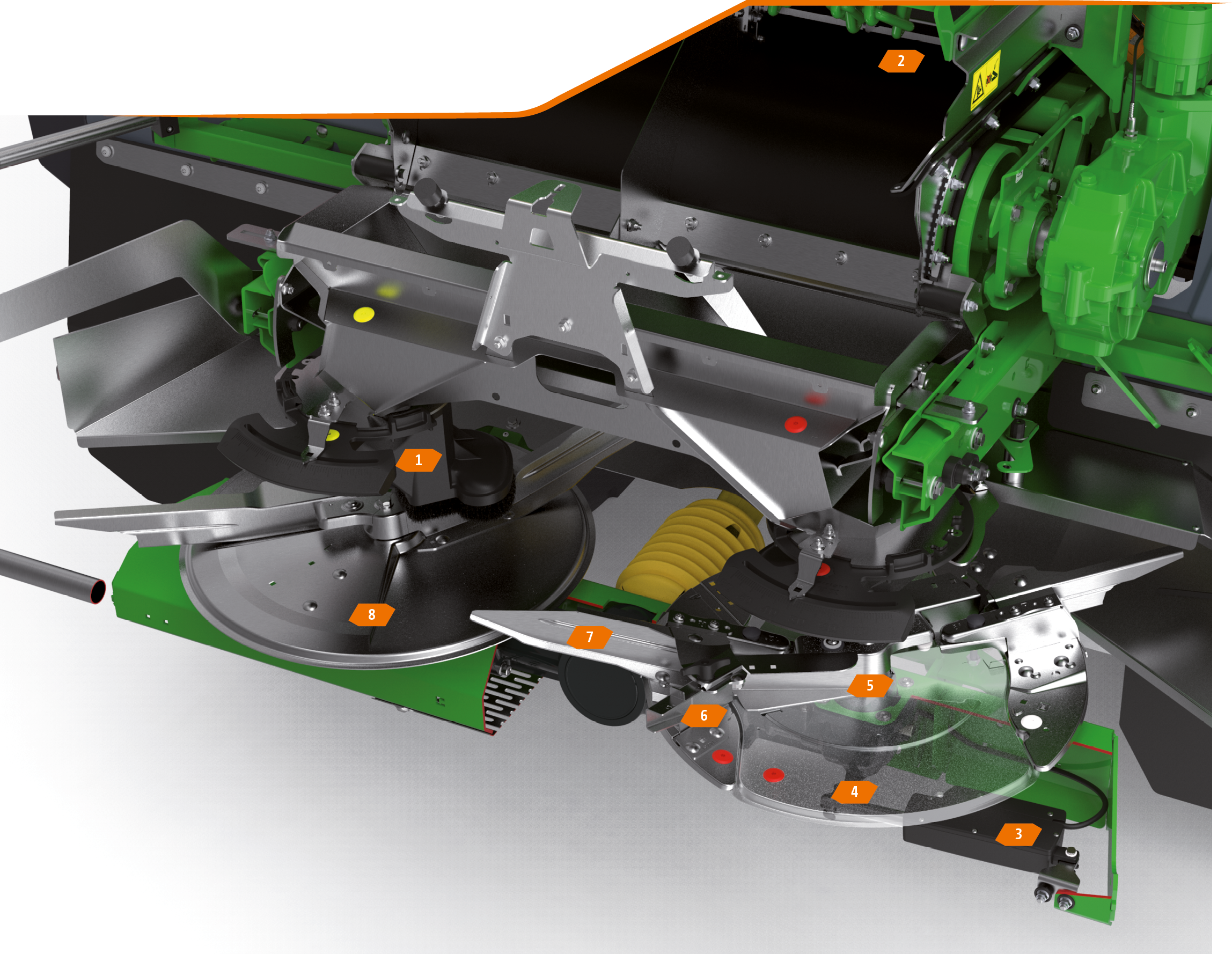
1. Electric delivery point adjustment for pin-point metering and Section Control – manual operation with ZG-TX Easy 
2. Electric double shutters for precise, side-independent fertiliser metering – manual, single shutter as an alternative 
3. Electric actuator for adjusting the carrier vane 
4. Auto-TS gearbox, the heart of the integrated border spreading system 
5. Comfortable switching between border spreading and normal spreading via adjustment of the carrier vane 
6. Short border spreading vane for precise side, border and water course spreading 
7. Long normal spreading vane for high throwing distances and double overlap, even at a working width of 36 m 
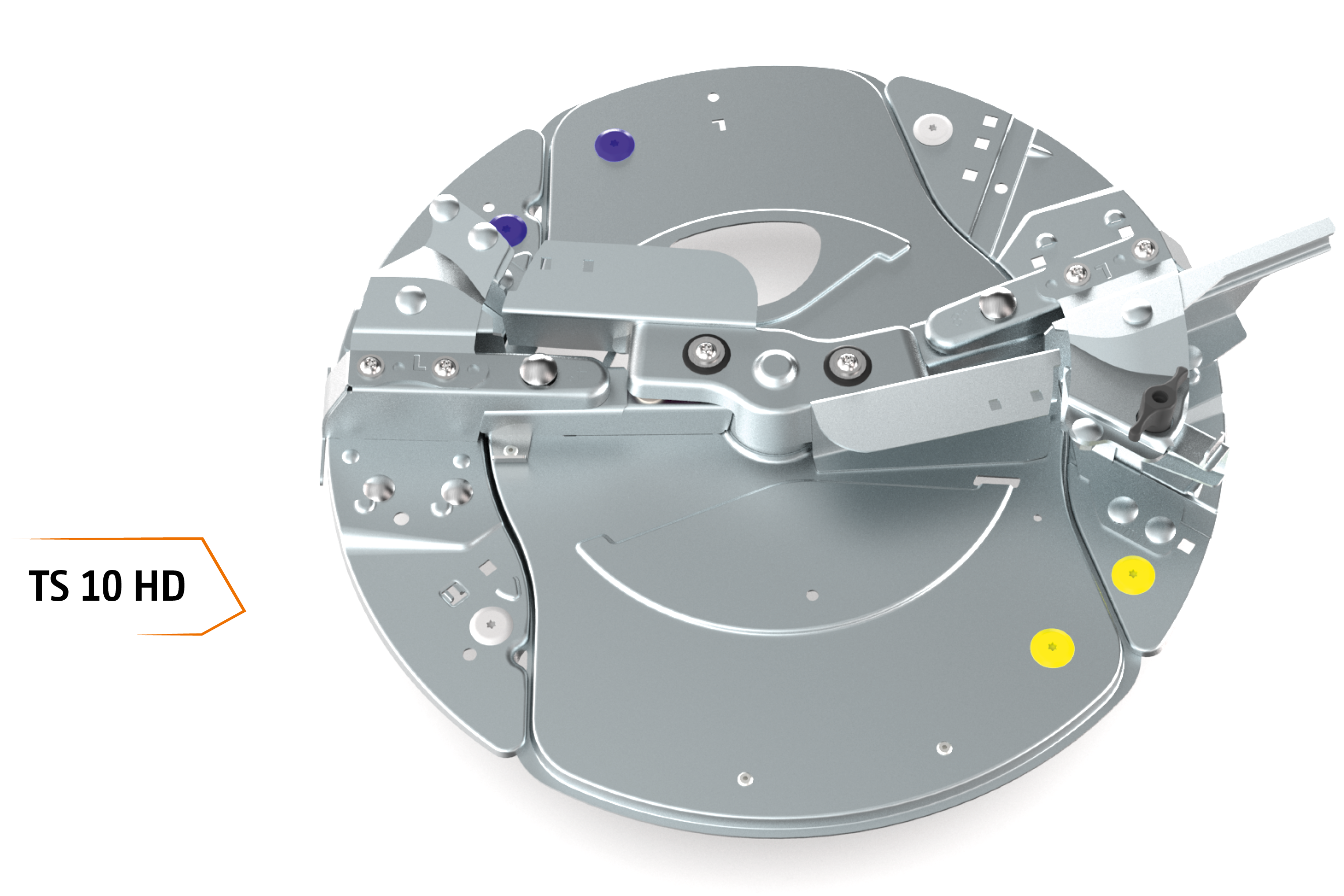
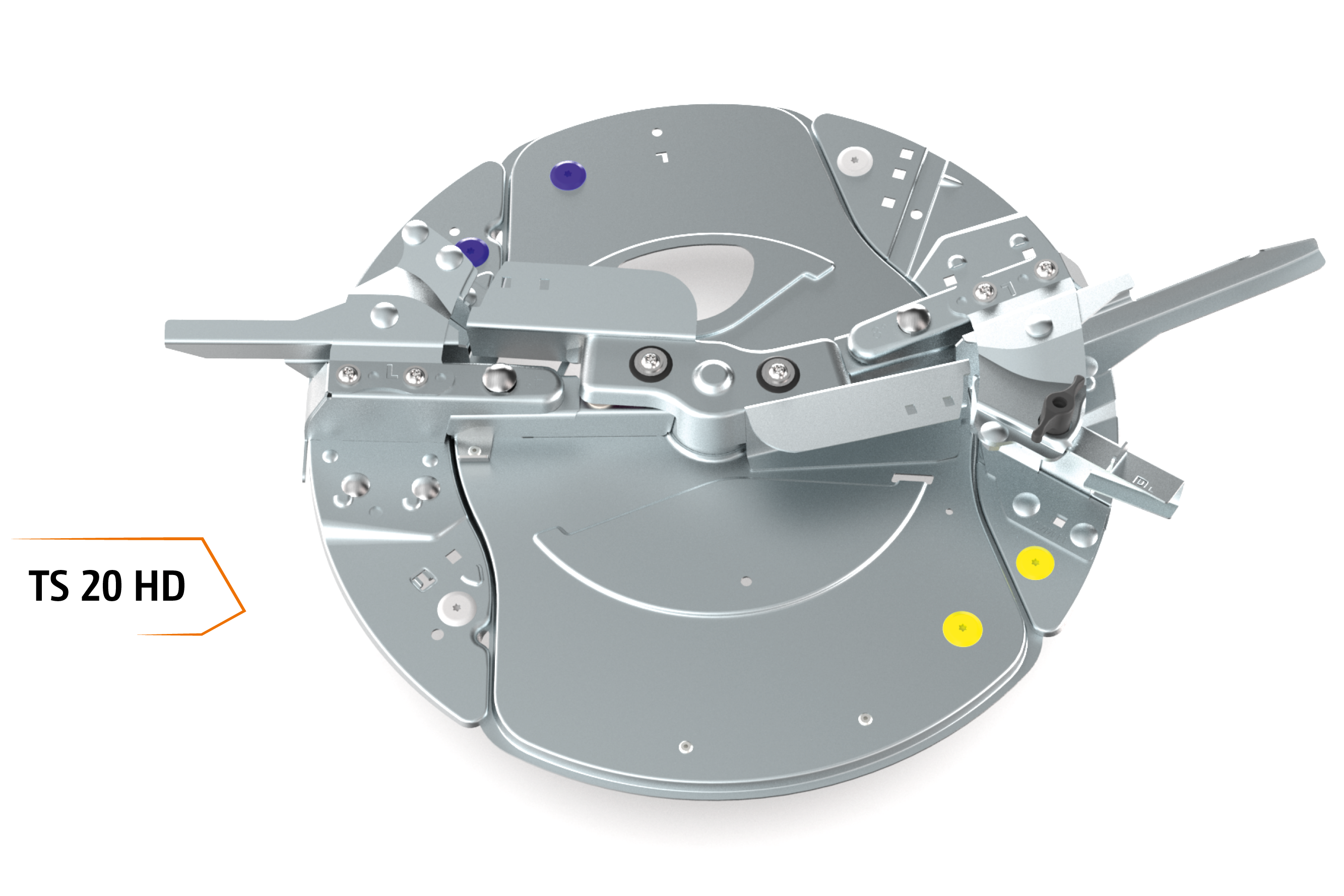
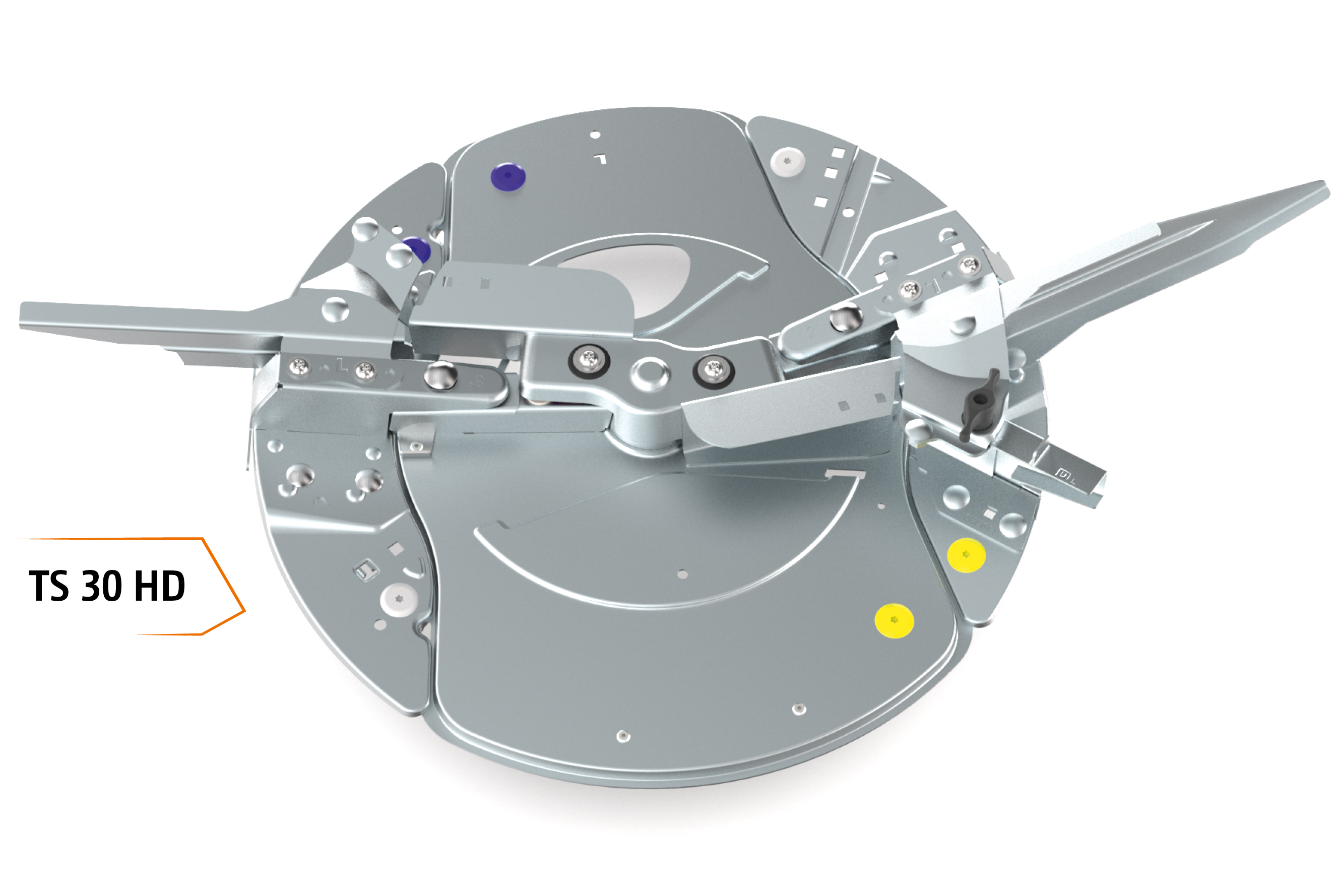
8. TS stainless steel spreading disc with easy-to-exchange spreading vane sets: TS 10 HD, TS 20 HD and TS 30 HD for working widths from 15 to 54 m
 

More information + Less information -

Multiple spread fans: optimum lateral distribution under all conditions

The distinct profile and angle of the spreading vanes results in the TS spreading system producing multiple spread fans. The optimal trajectory and the large overlapping pattern of the fertiliser make the spreader insensitive to changes in slope and height.

Ultra-quick and precise! Electric actuators for the delivery system
The TS spreaders open up new dimensions in terms of maximum application rates, forward speeds and precision. To achieve this, they are equipped with an excellent delivery system with quick-reacting, precision actuators.

Concentric delivery point adjustment
The concentric rotation of the delivery system around the centre of the disc allows precise adjustment to various working widths and fertiliser types while protecting the fertiliser from shatter by placing it close to the centre of the spreading disc.

More information + Less information -

2 methods for the optimum metering of mineral fertiliser

AMAZONE offers two options for optimum metering with the manual single shutter, which can be used as a low application rate slide for lime, or the electric double shutter for mineral fertiliser. In the simplest equipment level, the single shutter enables forward-speed related rate control. 

The intelligent interaction of the floor belt speed and electric double shutter enables quick and precise regulation. As a result, side-independent metering is possible when using application maps or part-width section control.

More information + Less information -

TS spreading discs

For the utmost precision at all spreading widths up to 54 m

Spreading system made from stainless steel – for a long service life
On the TS spreaders, the entire spreading system is made from stainless steel, thereby ensuring a long service life.

The different spreading vane sets can be quickly and easily exchanged using an interchangeable system. The ideal solution, for example, with contractors.

To switch between normal spreading and border spreading, different spreading vanes are activated via the so-called AutoTS system without the necessity to change spreading disc settings.

Hard-faced spreading vanes
The spreading vanes are coated with a special long-lasting anti-wear protection. Consequently, the result is a three-fold increase in lifespan.


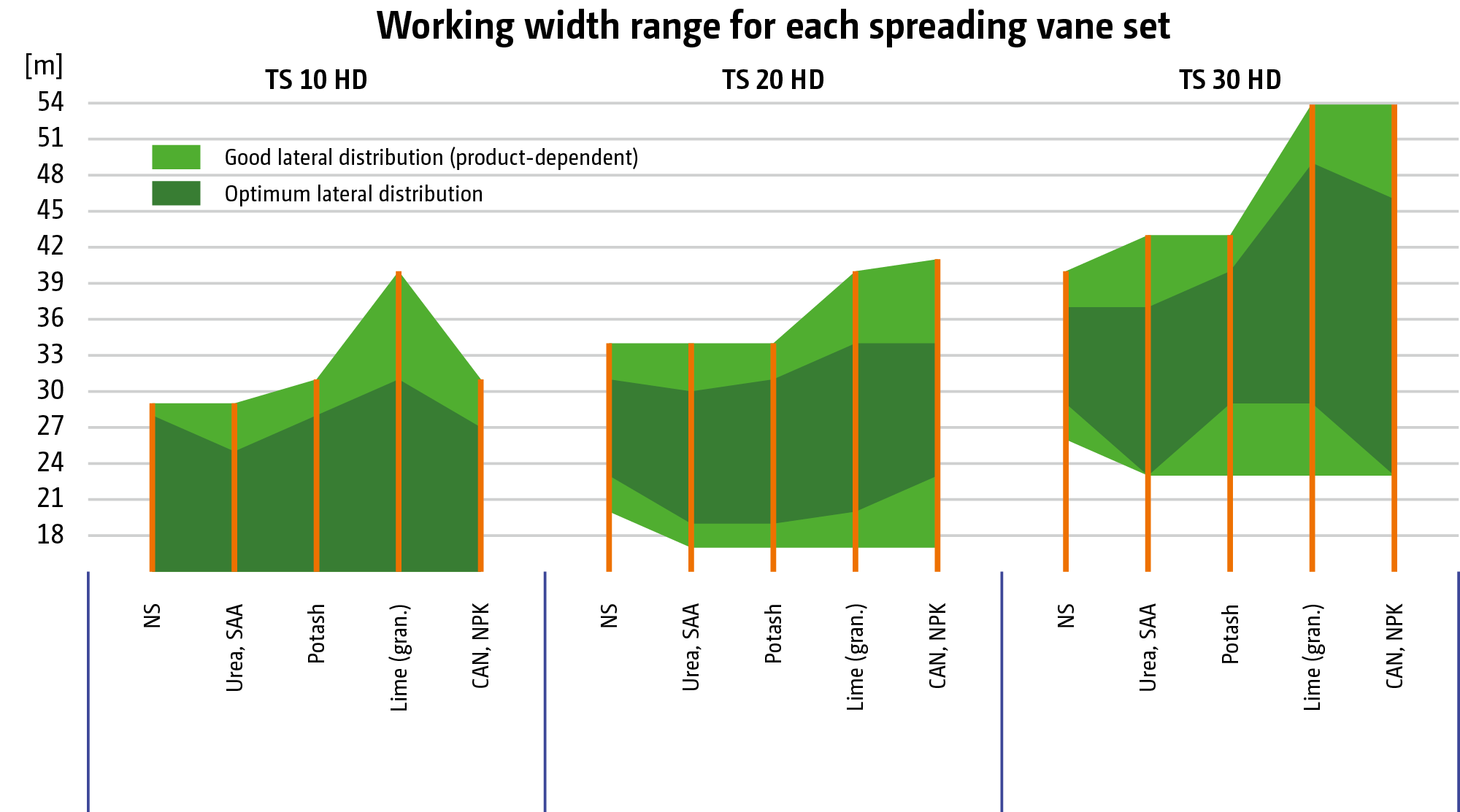
Optimum working width ranges of the spreading vane sets, depending on the fertiliser being spread: 

  • TS 10 HD = 15 m – max. 27 m
  • TS 20 HD = 21 m – max. 33 m
  • TS 30 HD = 24 m – max. 54 m


More information + Less information -

AutoTS – comfortable and precise lateral distribution right up to the field boundary

Via the disc-integrated AutoTS border spreading system, the different border spreading techniques can be activated– border or water course spreading – comfortably via the terminal in the tractor cab and irrespective of which side.


AutoTS - the ingenious principle

A setting motor twists the carrier vane forwards by approximately 10 ° so that, when border or watercourse spreading, the fertiliser is delivered via the shorter border spreading vanes. Due to the combination of disc speed and a shorter vane, the fertiliser is thrown over a significant shorter distance without affecting it mechanically.


Effective and precise – spread only where the fertiliser will benefit plant development

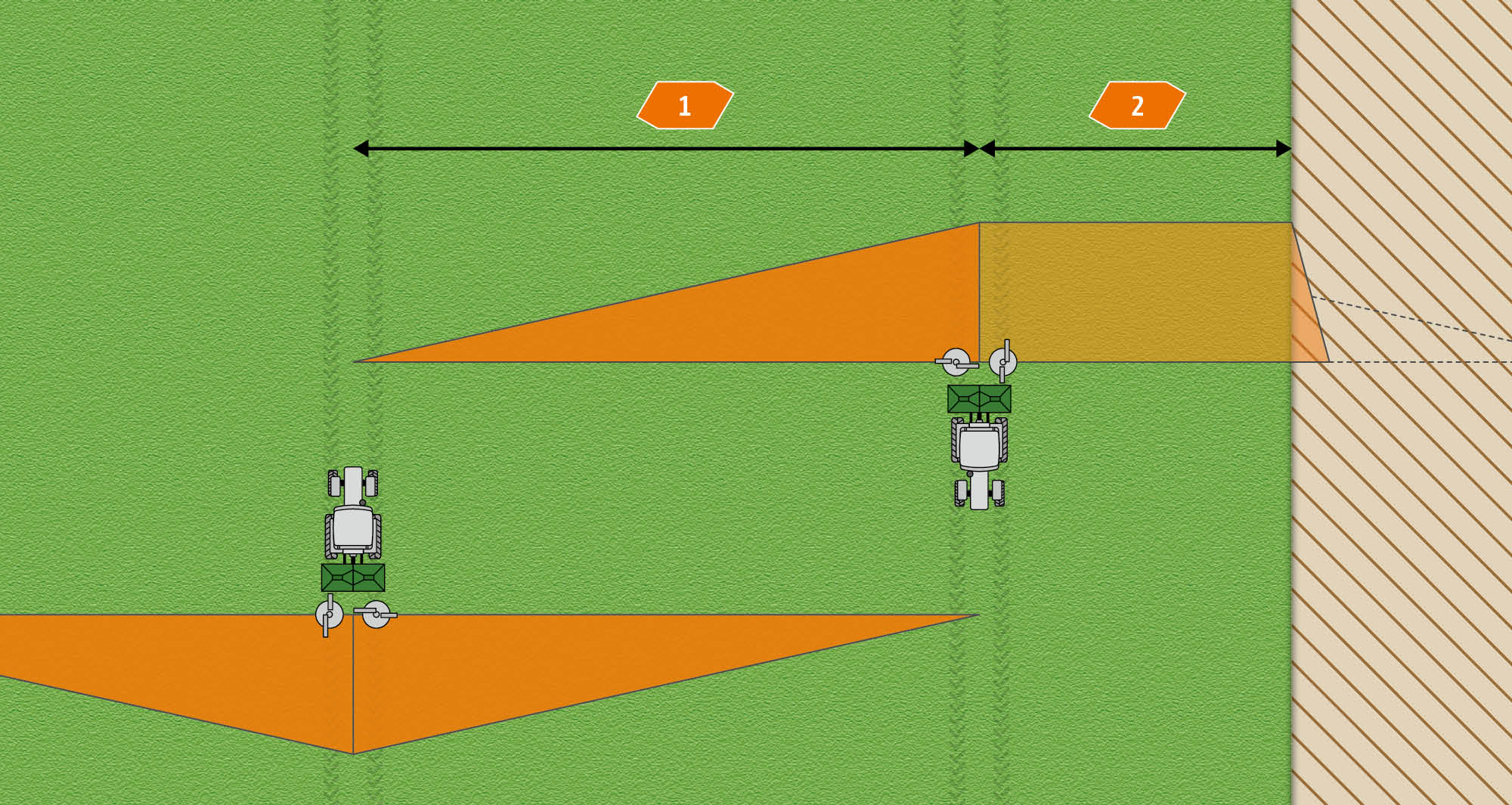
1) Working width 2) Half working width

Side spreading (yield-oriented setting)
The adjacent field is an area which is used agriculturally. In this case it is tolerable for a small quantity of fertiliser to be thrown over the field boundary. The full target rate is applied right up to the field boundary.


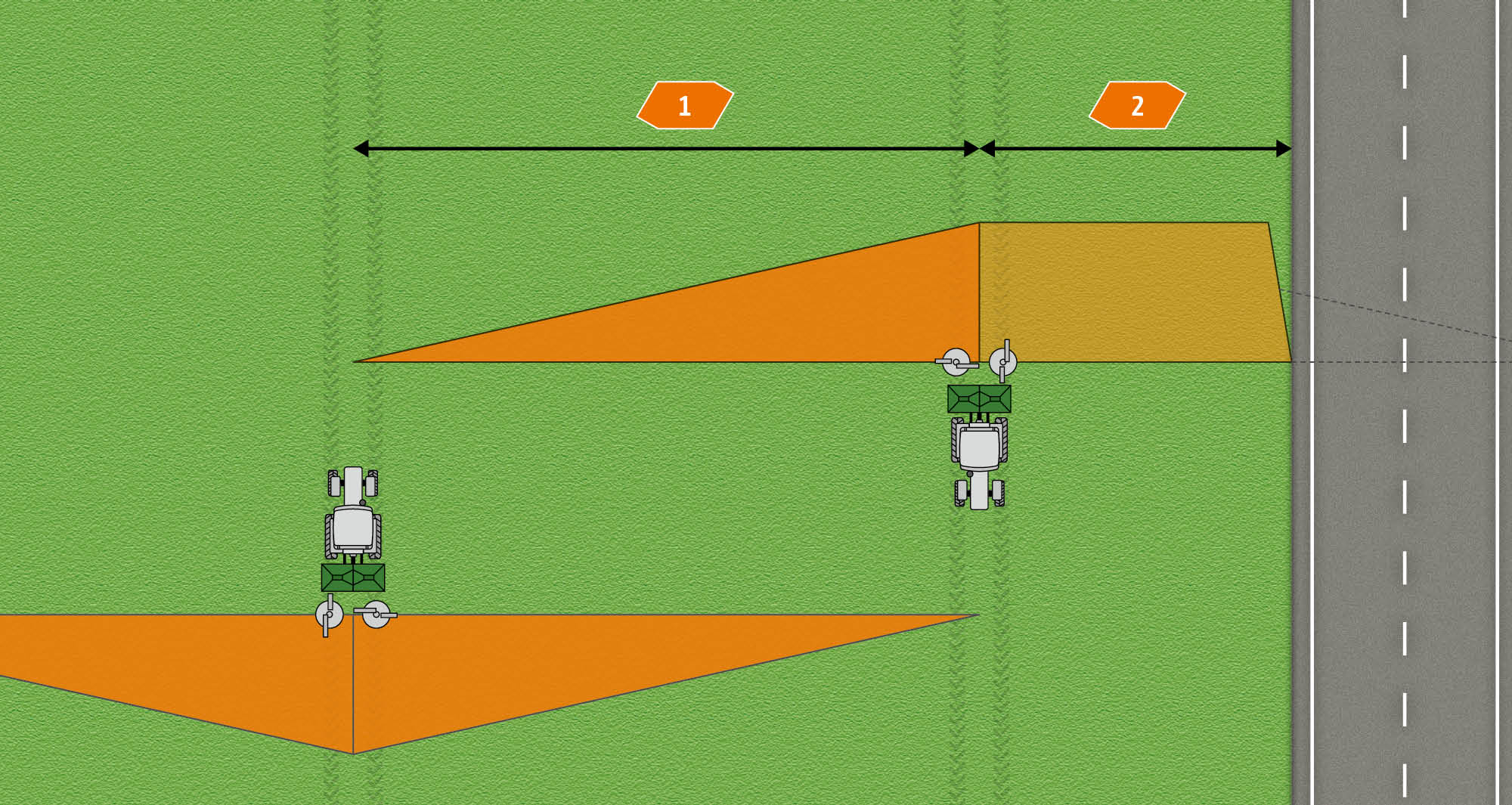
1) Working width 2) Half working width

Border spreading (environmentally oriented setting)
If the field is next to a road or a cycle path, no fertiliser may be thrown beyond the field boundary. In this case, the throwing distance is adjusted in combination with the shutter slide.


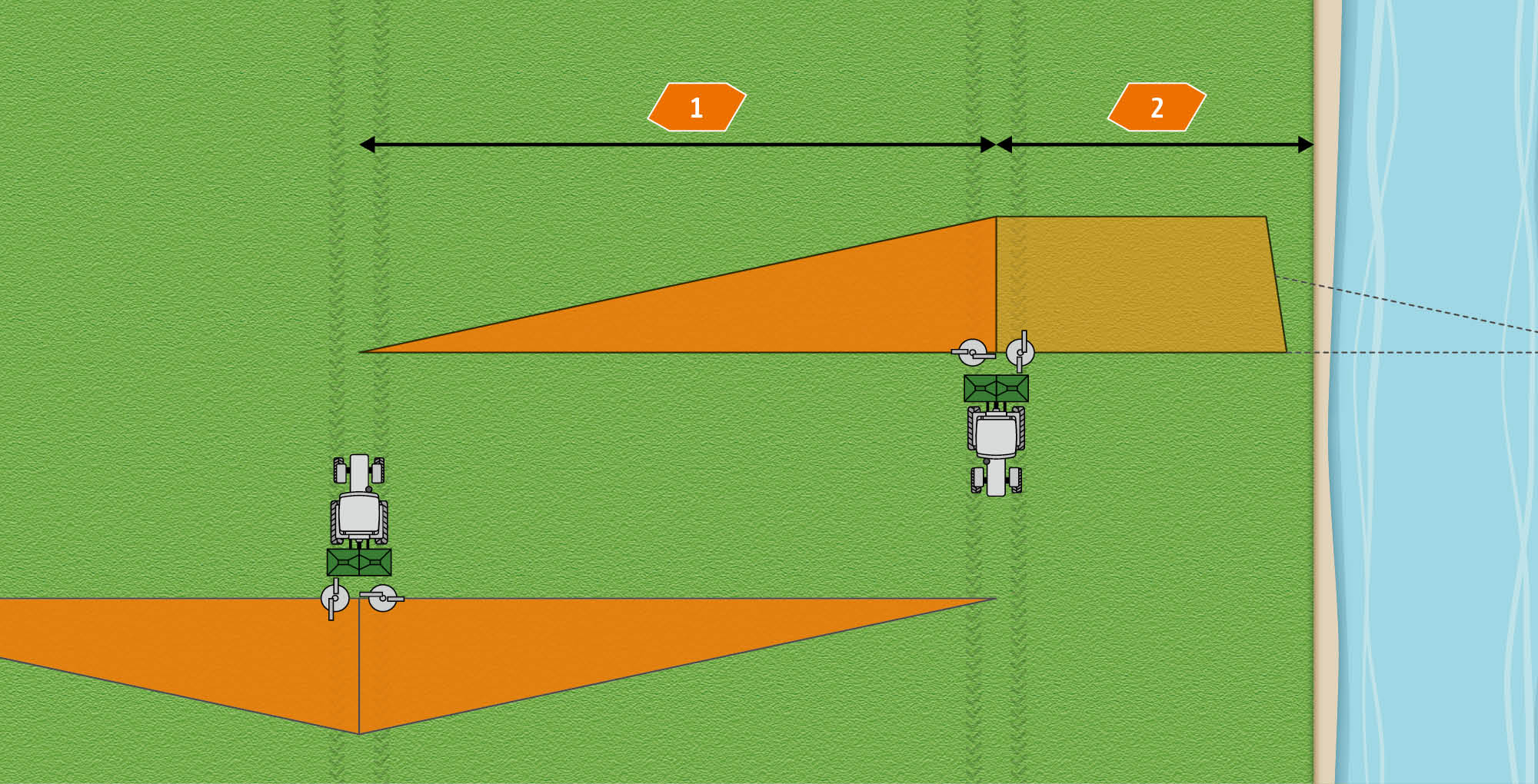
1) Working width 2) Half working width

Water course spreading (environmentally oriented setting)
If there is a body of water directly at the edge of the field, a defined distance to the water must be maintained when fertilising according to the fertiliser regulations. For this purpose, the throwing distance is further reduced in combination with the shutter slide.


The ingenious operating principle of AutoTS
A setting motor twists the carrier vane forwards by approximately 10 °, so that the fertiliser is delivered via the shorter border spreading vanes when border or watercourse spreading. Due to the combination of disc speed and a shorter vane, the fertiliser is thrown over a significant shorter distance without affecting it mechanically.


Field trials prove the best border spreading results
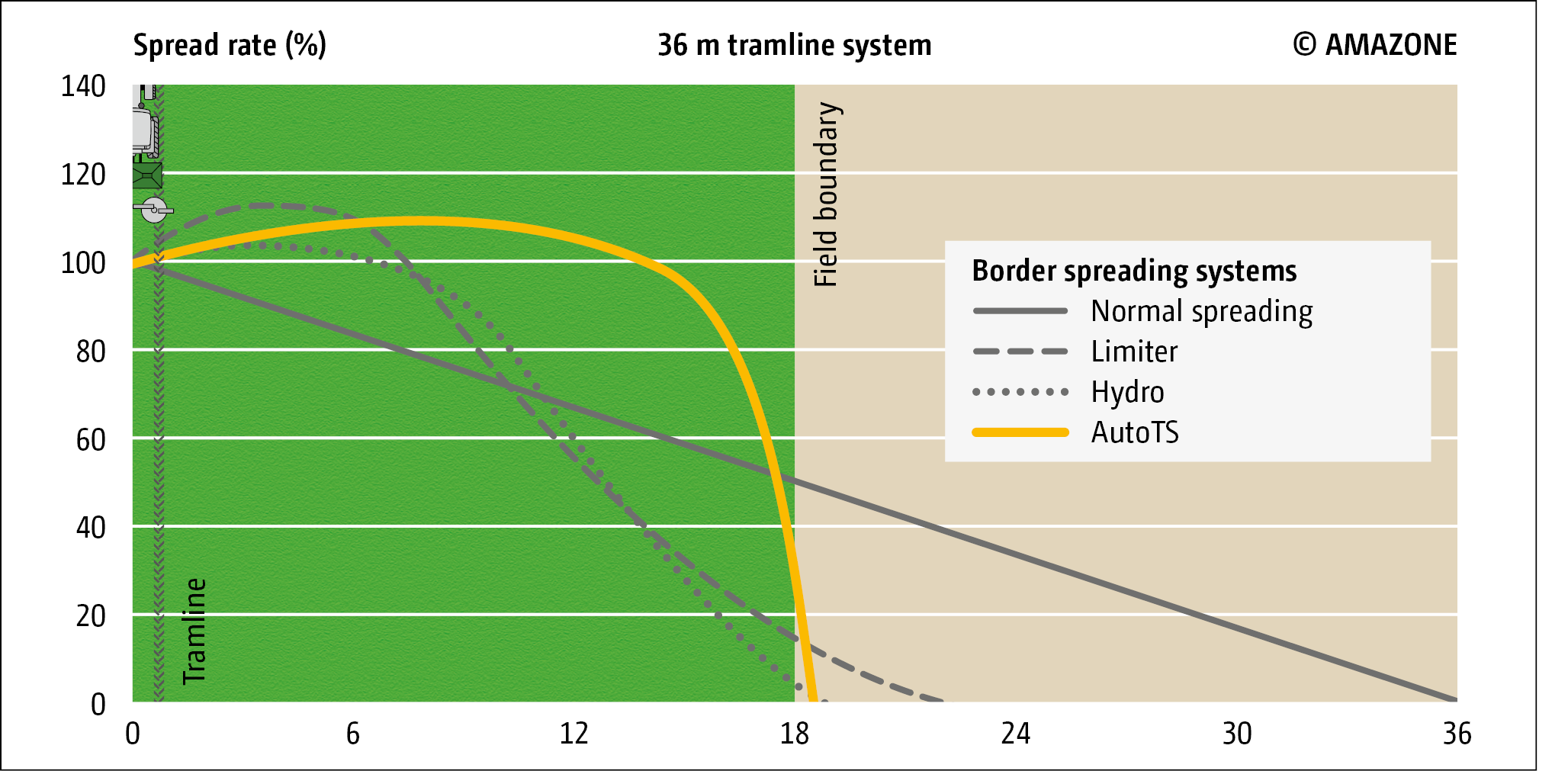
The aim of the field trial was to demonstrate the fact that border spreading systems not only provide ecological benefits but also that they have a great influence on the potential yield in the field boundary area.

Precise technology is required to spread the full rate of fertiliser right up to the field boundary, even at the larger working widths, as well as avoiding any fertiliser losses outside the field boundary.

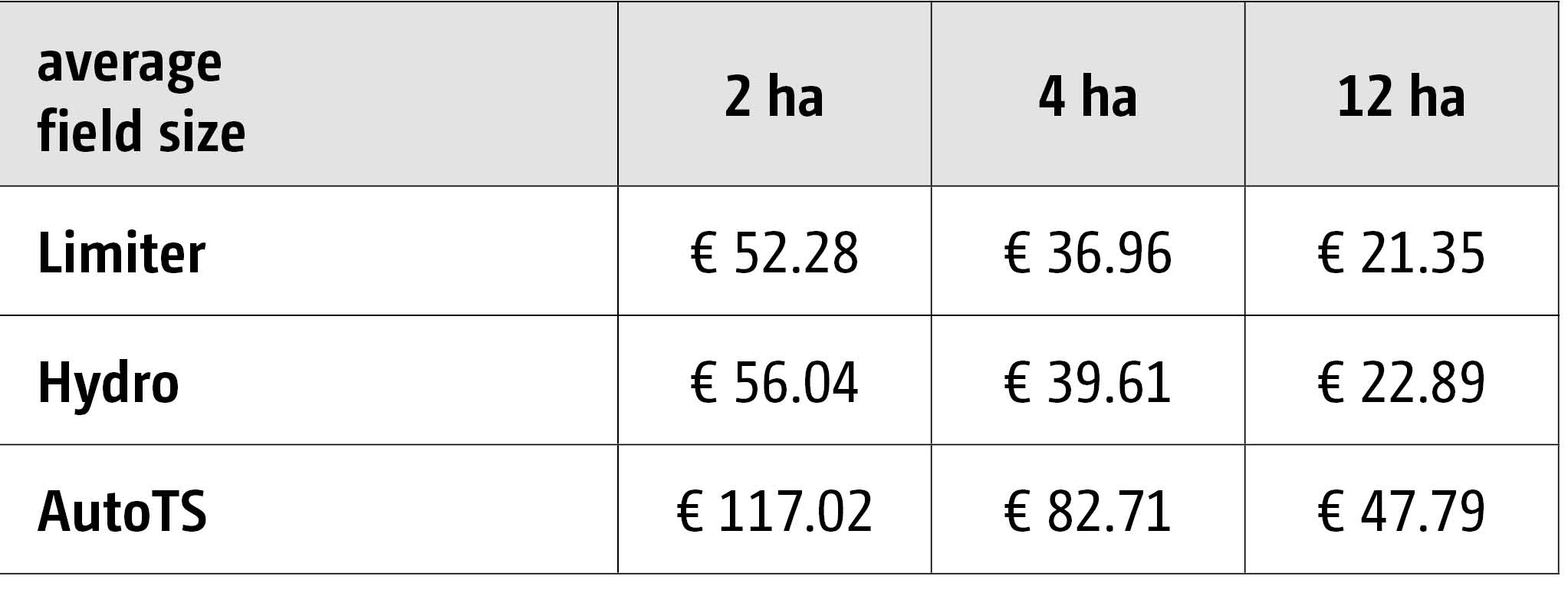
Additional revenue per hectare of land farmed per year using different boundary spreading systems on a working width of 36 m
(top agrar 07/2022, source: Innovation Farm)

AutoTS meets these requirements. This means that higher yields can be achieved, even at the field boundary.


Core messages of the trial 

  • A wider working width or smaller field sizes increases the level of return on a boundary spreading system.
  • The AutoTS spread patterns show a relatively even spread rate all the way up to the boundary where the rate then drops steeply.
  • Any underdosage was clearly reduced by using AutoTS, which translates into higher yields.

More information + Less information -

HeadlandControl headland optimisation

The problem: Over- and under-fertilisation on the headland

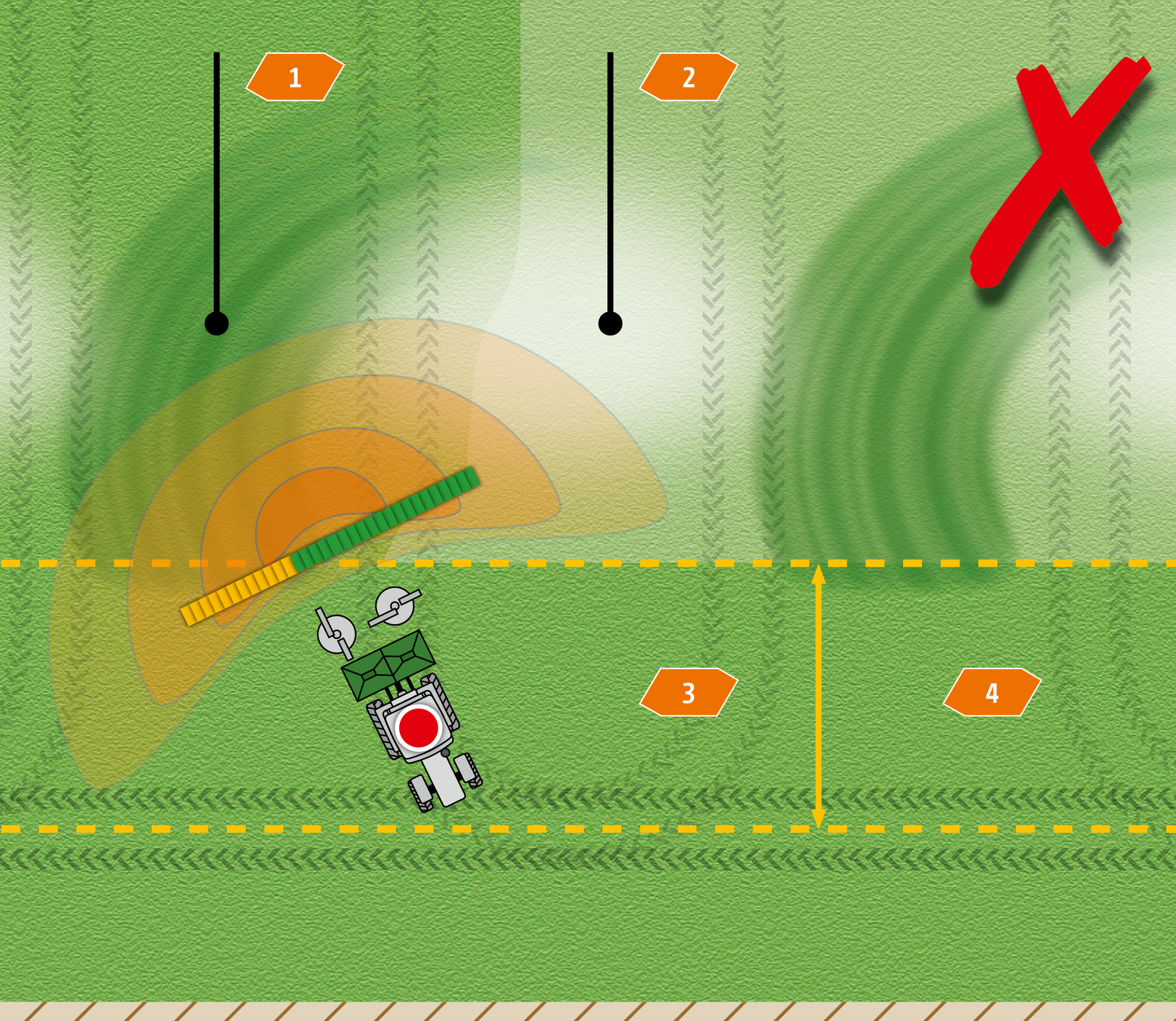
Fertiliser spreaders have a high throwing distance behind the machine. In practice, the switch-off points are usually only achieved when the tractor is turning on the headland. As this happens, the spreader fan behind the tractor swings out to the side. This results in over-fertilised and under-fertilised zones.
 

Without HeadlandControl: the spreader switches off too late and is already turning, meaning it would have to drive beyond the headland tramline.

  1. Over-fertilisation (dark-green)
  2. Under-fertilisation (white)
  3. Standard headland
  4. Inner throwing distance without HeadlandControl

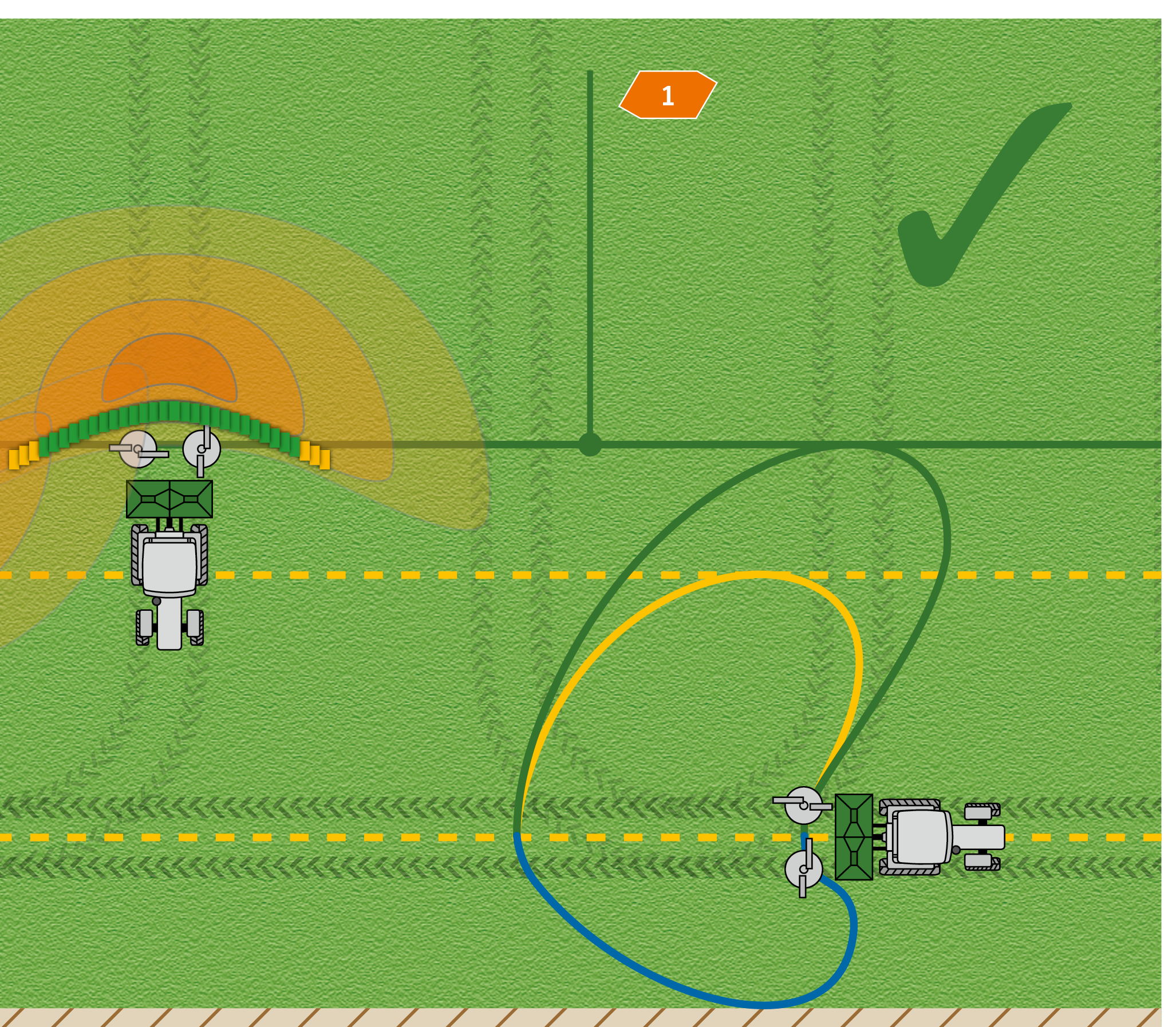
With HeadlandControl: Thanks to HeadlandControl, the spreader continues to spread into the crop on the headland, allowing the tractor to follow the headland tramline

  1. With HeadlandControl: extended headland

The solution: HeadlandControl

When HeadlandControl is activated, the throwing width and spread rate are increased on the field side, so that the switch-off point is moved towards the inside of the field. Furthermore, the new part-width section control, which is now adapted to the shape of the spread fan, causes the part-width sections to be switched off from the outside to the inside when entering the headland. Over- and under-fertilised zones on the headland are subsequently avoided.

Benefits of HeadlandControl: 

  • Optimised switch points for Section Control
  • Uniform yield on the headland
  • More room when turning

More information + Less information -

GPS-Switch part-width section control

GPS-Switch automatic part-width section control

With the GPS-Switch automatic part-width section control, fertiliser is evenly applied everywhere with pinpoint accuracy, even in wedge-shaped fields, on the headland or in irregularly shaped fields – without any overlaps or misses. Switching following the shape of the actual spread fan is a special feature. This is because a fertiliser spreader does not spread behind the machine in a straight line, unlike a crop protection sprayer.

Advantages of the automatic part-width section control: 

  • Reduction in the driver’s workload and the use of inputs
  • 16 part-width sections reduce overlap to a minimum
  • Parabolic switching in the shape of the actual spread fan for maximum efficiency
  • Fertiliser-specific shape and position guarantees perfect switch points
     

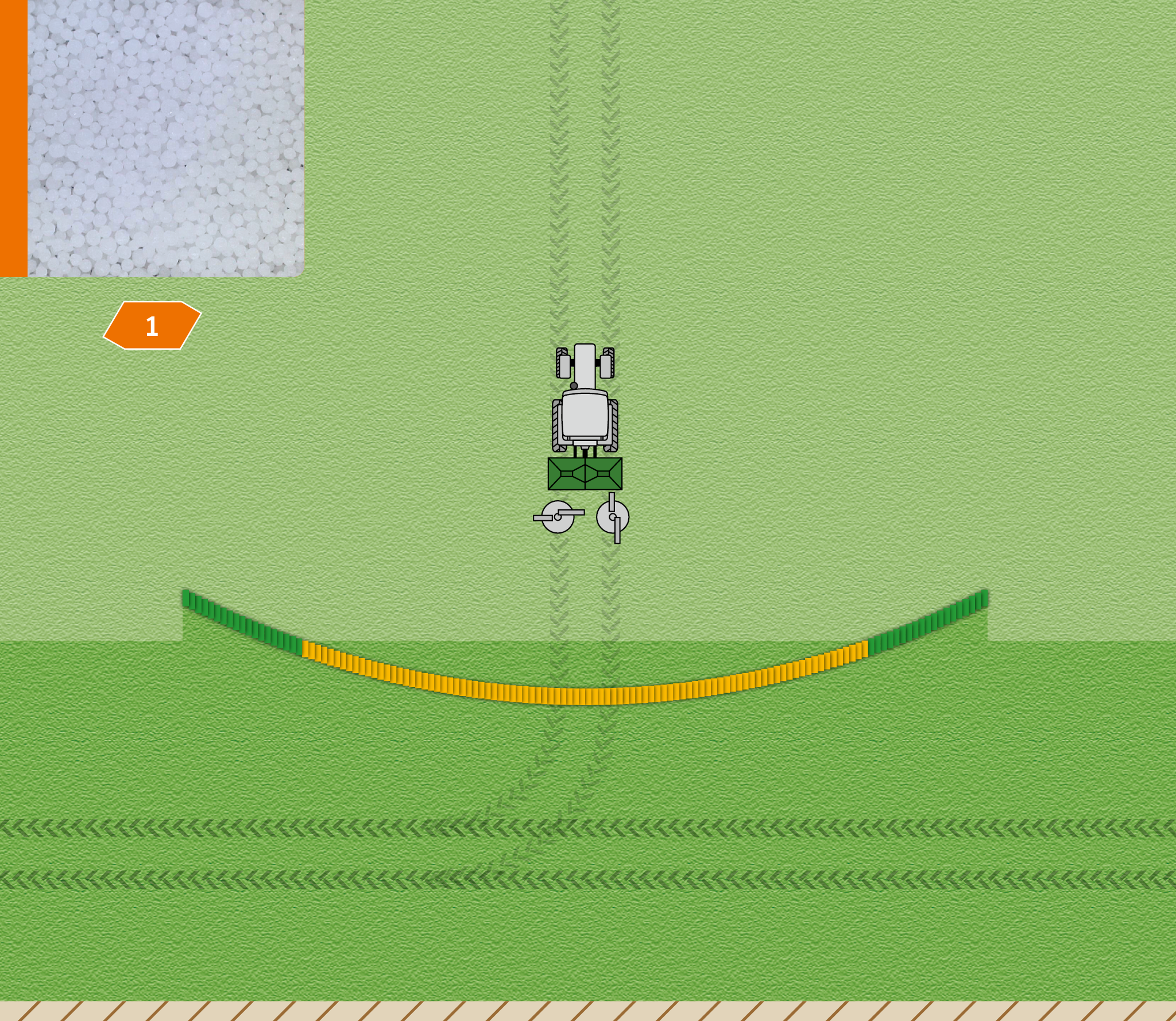
  1. Urea

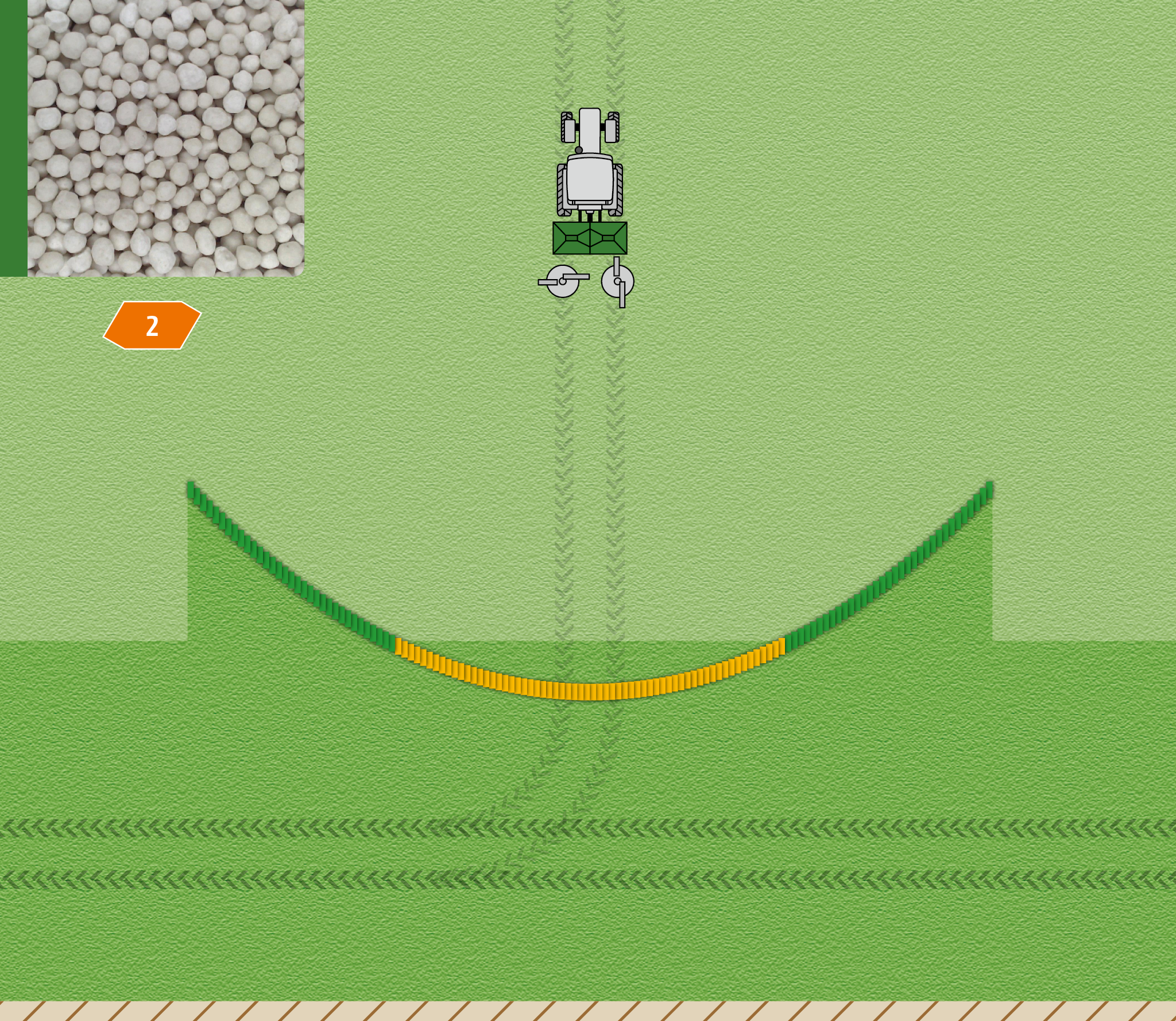
  1. CAN

Each fertiliser has different trajectory characteristics. This is why Section Control calculates the exact switching points for the optimum shape and position of the spread fan for each pass.

More information + Less information -