
Strategies for successful oil seed rape cultivation
In the same way as the sowing method, targeted placement of nutrients and companion crops affect the development and yield formation of winter rape
This is why three levers of conventional oil seed rape cultivation were investigated at Gut Wambergen: the sowing method and row width, the targeted under-root fertilisation and the placement of companion seeds. The focus was on the development of the individual plant and its contribution to the future yield.
Sowing oil seed rape with the Precea 6000-2FCC
Impact of the weather over the entire growing season
The weather represented a great challenge to the development of the oil seed rape. After the previous crop of wheat had been harvested, the following three weeks were marked by drought and heat. This led to extremely dry conditions during sowing. However, the rain after sowing helped ensure that the crops emerged from the ground very quickly. The hot and wet weather in autumn resulted in very good development.
There was sufficient precipitation in spring, meaning that we had approx. 400 mm of rain from the beginning of 2026 to the end of June 26. The crop ripened very quickly from the end of June as a result of an extreme heat wave. There were very high temperature fluctuations between day and night (more than 20°C) during the flowering period around the 20th April, which certainly caused stress in the plant.
Sowing method: interaction between the growing space and the individual plant
Drill sowing with the AMAZONE Centaya Super with RoTeC coulters with a row spacing of 12.5 and 25 cm and precision sowing with the AMAZONE Precea 6000-2FCC with 50 cm were compared. The variants with the Centaya were drilled with 40 germinable seeds/m² and the sowing rate in the Precea was 27 seeds/m².
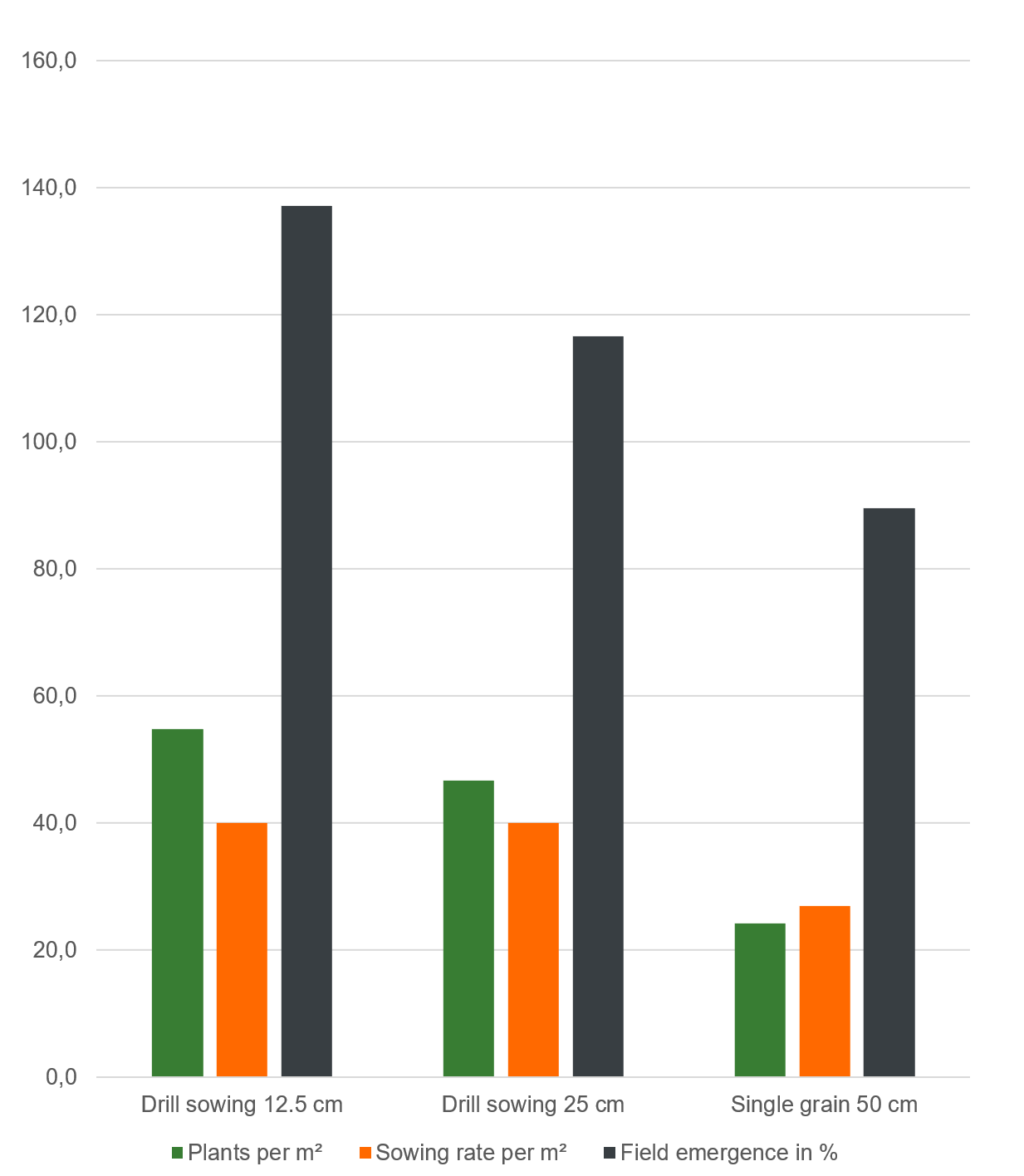
The single-seed placement produced an extremely homogeneous crop and deposited the seeds evenly onto a moist layer of soil. This resulted in an extremely homogeneous field emergence. In the case of the drill sowing, the field emergence extended over a lengthy period, with the result that the individual plants developed very unevenly.
It was apparent that the actual field emergence in the drill sowing was higher than the planned sowing rate. The reason for this is that the applied rate may change e.g. due to vibration caused by stones.
Crop development in the autumn (29.10.2025)
Precision sowing with the highest grain yield
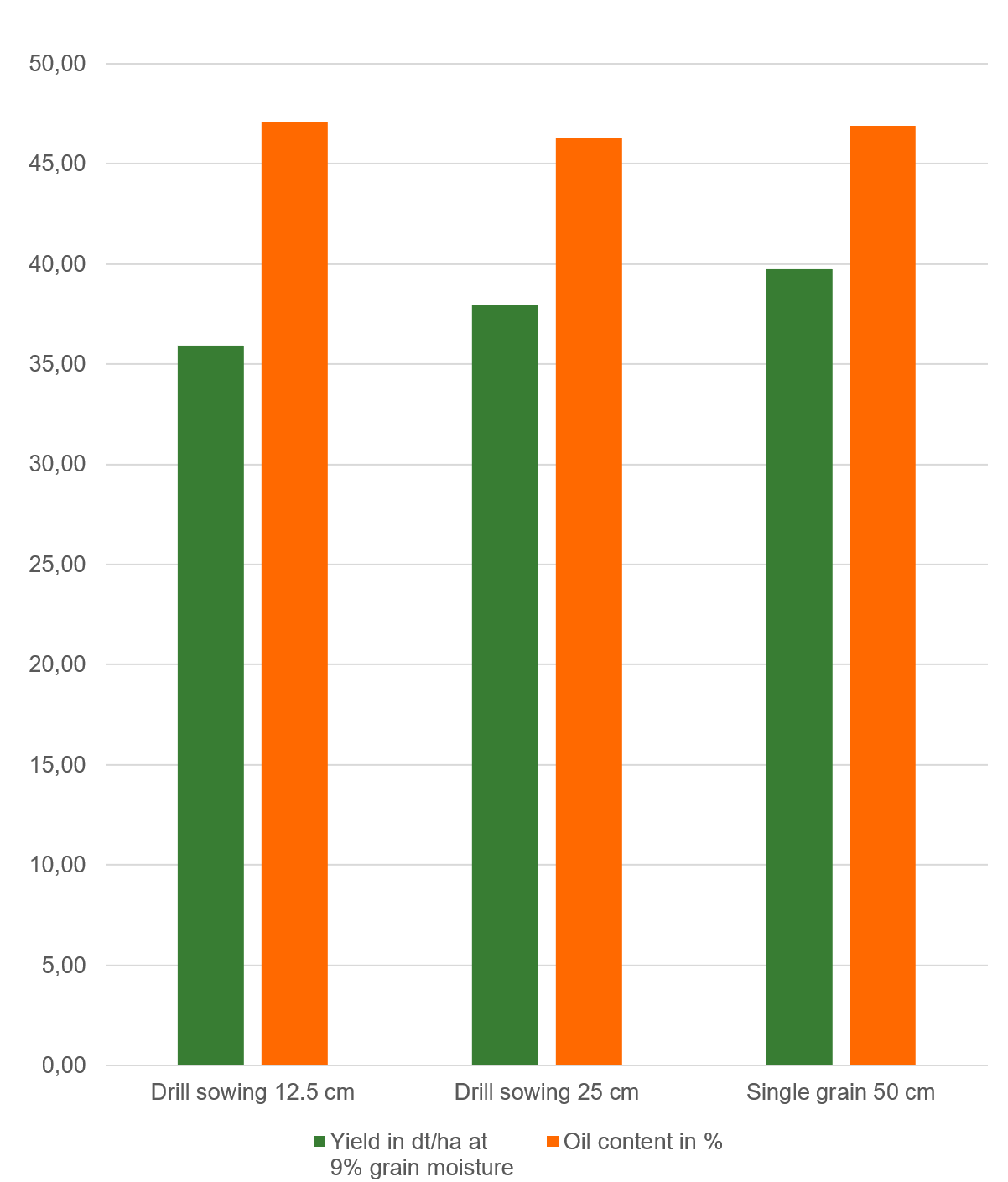
The advantage of the stronger individual plants was evident right up until harvest. Increasing the width of the row spacing to 25 cm also had a positive effect in drill sowing. The oil content remained at a comparable level over the three variants.
The challenge in precision sowing was that this crop required a longer period to cover the inter-row area and suppress weeds more effectively. Weed pressure was only slightly higher.
Autumn fertilisation: delivering nutrients directly to the plant
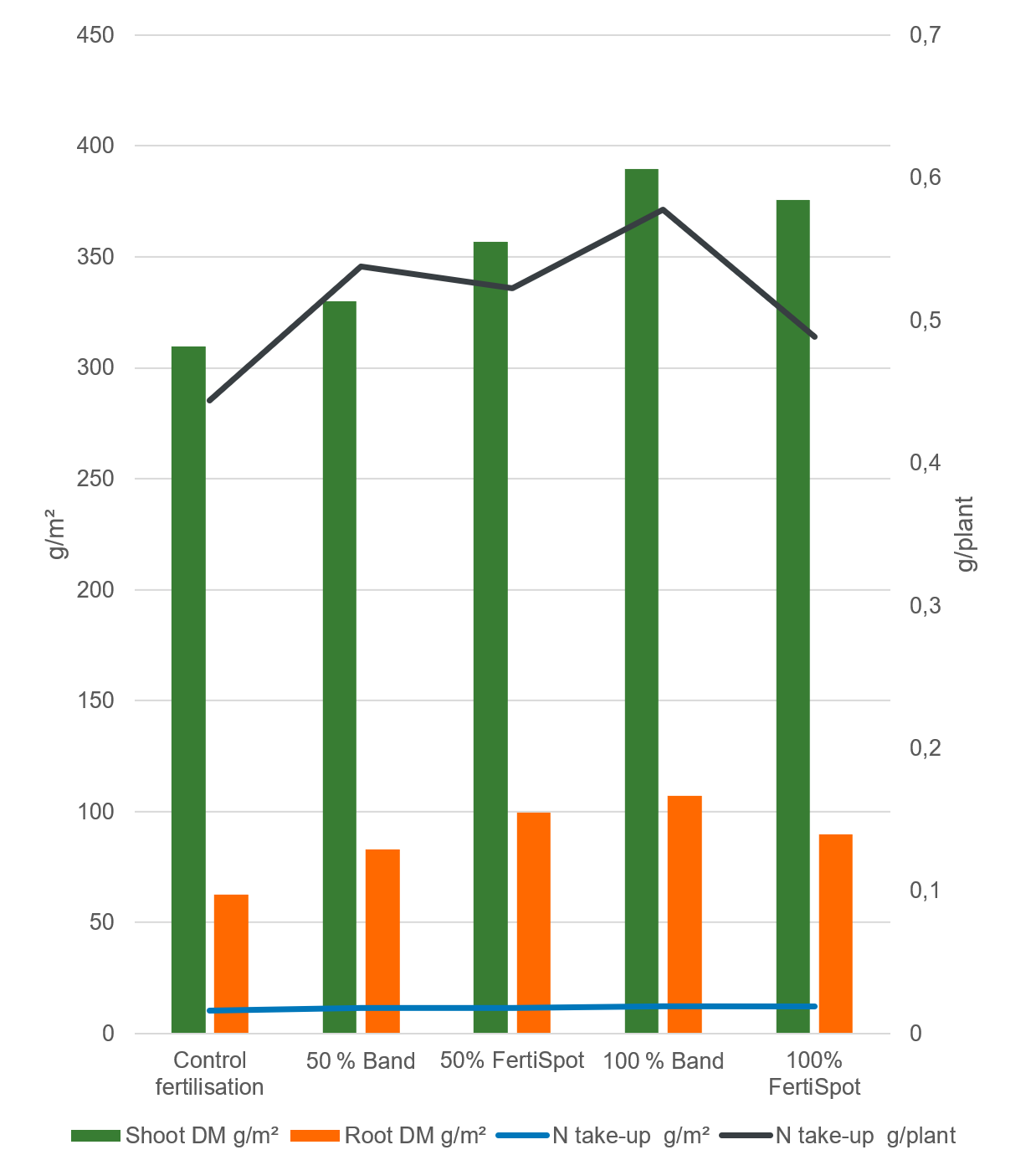
The under-root fertilisation was compared as a band in the Precea and as a pin-point dose with FertiSpot. In addition to an unfertilised control variant, 50 and 100 % of the designated autumn fertilisation were investigated. The goal was to provide early nutrition to the young rapeseed plants while placing the fertiliser as precisely as possible.
Autumn fertilisation increased the N take-up per plant and supported the pre-winter development. This was apparent e.g. in the soil coverage; autumn fertilisation increased the degree of coverage from approx. 43% to approx. 66% in the 50% FertiSpot variant or 77% in the 100% fertilisation variant, which is also reflected in the measurement results for above-ground shoot biomass. Furthermore, autumn fertilisation also promoted root growth.
However, this developmental advantage did not result in a clear increase in yield during the trial year. There was also no discernible difference in yield between band placement and FertiSpot. The yield level was 40 dt/ha.
Companion crops: placement determines the competition
The objective of companion crops for oilseed rape is to improve soil structure and promote soil life. They should also have a positive effect on the nutrient dynamics. And something which holds a particular appeal for many people: you can reduce the number of cabbage-stem flea beetle larvae.
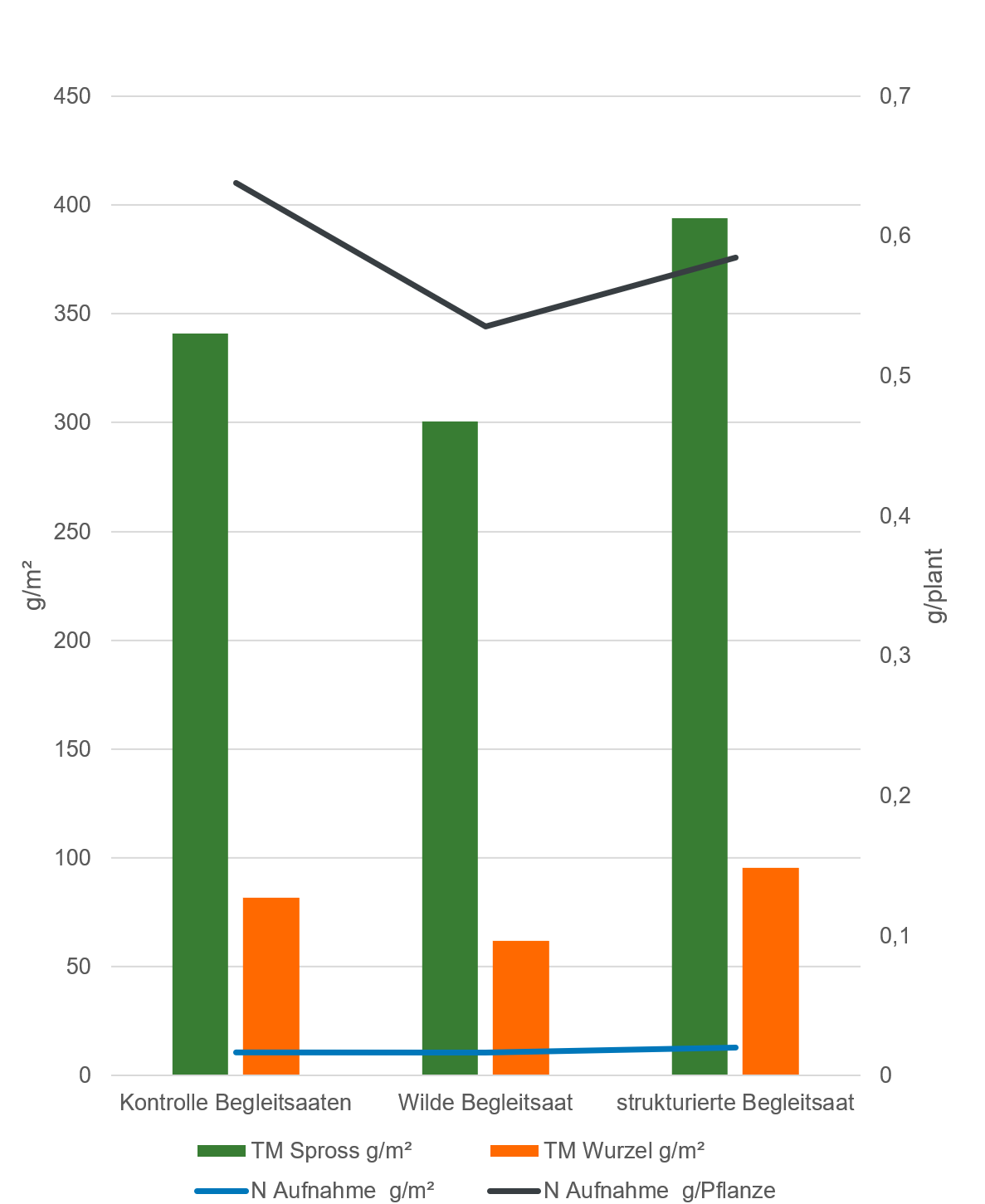
We compared a control variant with a broadcast companion crop sown in a separate pass with the Centaya Super and structured sowing (double row of companion crops between the precision-sown rows) with our CRF-Precea. The soil coverage was better than in the control variant as a result of the companion crops, whereby the structured companion crop was able to suppress weeds slightly more effectively, since the same seed rate was applied between the rows of rape. In addition, the development of the oil seed rape was weaker in the broadcast companion crop.
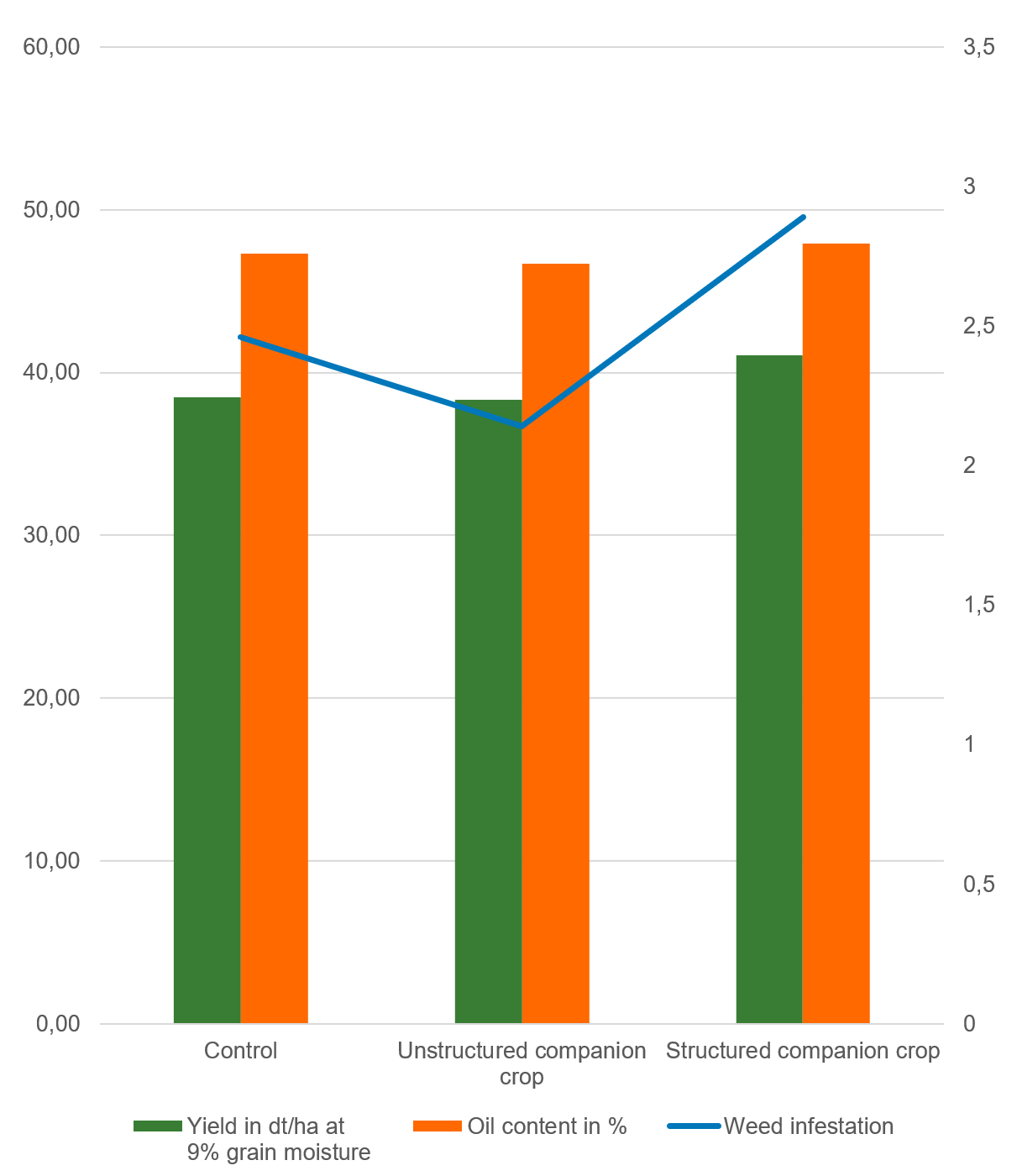
No differences between the variants could be identified owing to the low migration of insect pests. The structured sowing of the companion crop was also the best in terms of yield. It led to an increased yield of 5% compared with the control variant and the unstructured companion crop.
What can be learned from this for oil seed rape cultivation?
The trial components have something in common: what matters is not just the seed or fertiliser rate but also how precisely the rapeseed plant is provided with growing space and resources. The Precea generated the highest grain yield with a reduced seed rate and a 50 cm row width; increasing the width to 25 cm also had a positive effect in the Centaya.
The under-root fertilisation promoted the autumn development without generating a yield advantage this year. On the other hand, the spatial structure played a key role in the companion crops: the broadcast mixture increased the competition, and the structured sowing promoted the rapeseed plant and the yield.
Conclusion
The trial at Gut Wambergen illustrates the potential of a more precise crop establishment in conventional winter rape. More growing space and precise single-seed placement invigorated the individual plant. Autumn fertilisation improved the pre-winter development, whereas the structured placement had a positive effect on the oil seed rape and the yield in the companion crops.